Jethro — Lord of Sleep and Shadow
A bodiless, parasitic intelligence associated with corruption, fractured identity, nightmares, and the destabilization of living minds. Jethro is less a conventional character than an infectious influence: something that survives through hosts, distributes fragments of its will, and turns a person’s existing fears and desires against them.
Overview
Jethro is a major overarching antagonistic force within the setting. It has no stable physical body of its own and persists by inhabiting or attaching itself to living hosts.
Among Templar tribes across the cosmos, Jethro’s existence is not secret. The details vary between cultures—history, warning, theology, and legend often overlap—but the name survives alongside a common epithet: Lord of Sleep and Shadow.
Templar traditions do not always describe shadow as morally evil. Darkness may represent a necessary cosmic condition: the absence of light rather than a sin. Jethro’s danger lies not in darkness itself, but in what happens when its influence takes root inside a living mind.
Attribute | Known information |
Nature | Bodiless, noncorporeal, and parasitic |
Primary host | |
Known shard-bearers | |
Older-timeline shard-bearer | |
Legendary form | A massive black dragon with antler-like horns |
Origin | Red-born spirit; name [REDACTED] after t—king refuge inside |
Common manifestations | Nightmares, intrusive pressure, emotional amplification, identity destabilization |
Early in the story, Jethro is more often felt than seen: a voice behind a thought, pressure inside a nightmare, or the terrible consequences of an action taken through a host.
What Jethro is
- Noncorporeal: Jethro has no stable body of its own.
- Parasitic: it persists by inhabiting, attaching to, or embedding itself within living people.
- Corruptive: it distorts perception, impulse control, emotional regulation, and identity.
- Fragmented but connected: pieces of Jethro’s mind or will can exist as Shard of Jethroacross multiple people. Those shards themselves cannot spread to new hosts.
- Psychologically opportunistic: it rarely needs to invent a desire. It takes something already present—fear, grief, love, shame, anger—and pushes it toward catastrophe.
Legendary depiction
Although Jethro has no confirmed physical form, Templar folklore frequently depicts it as a massive, black, bulky dragon with antler-like horns. Some believe this shape appears in the nightmares of people Jethro is attempting to reach.
Origin status
The latest draft of 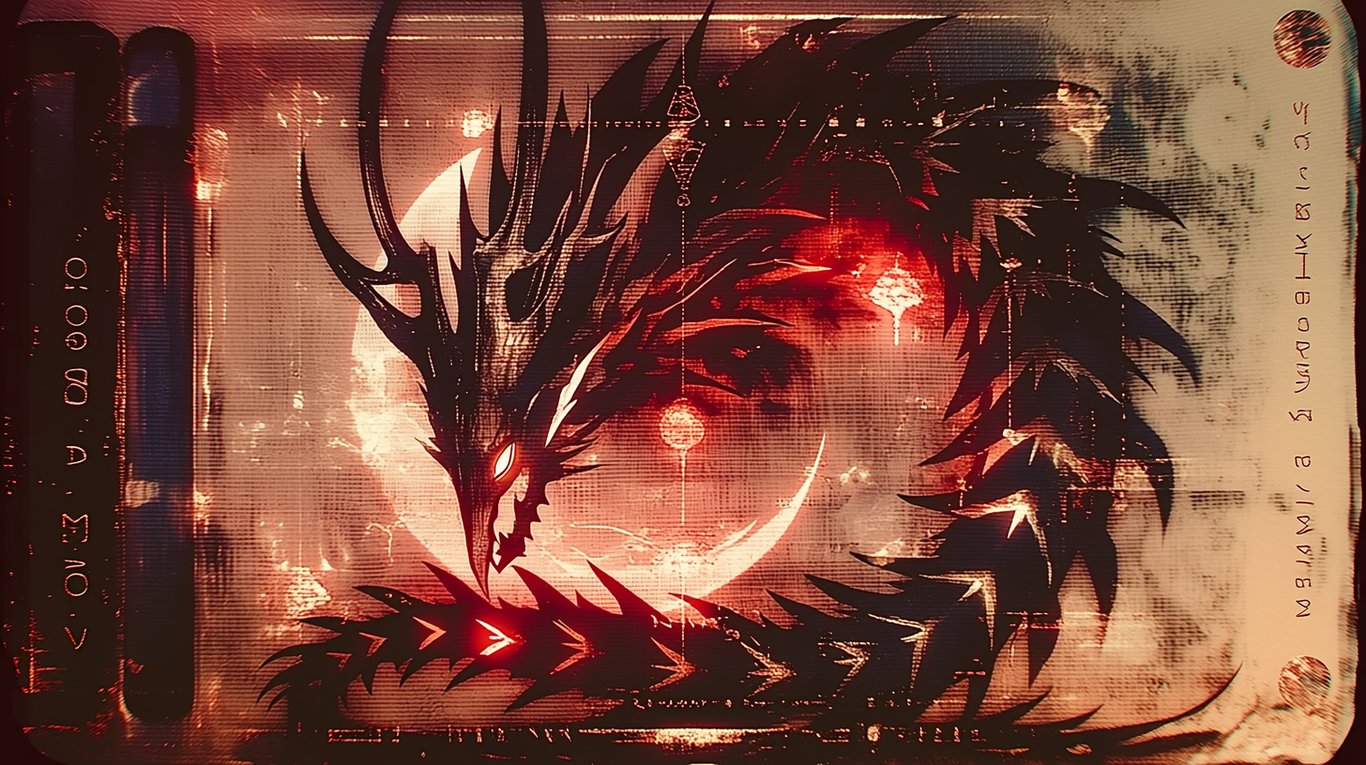 Reverie VI - Entaxis makes the naming sequence explicit: the Red-born spirit takes refuge inside the living mountain whose true name is
 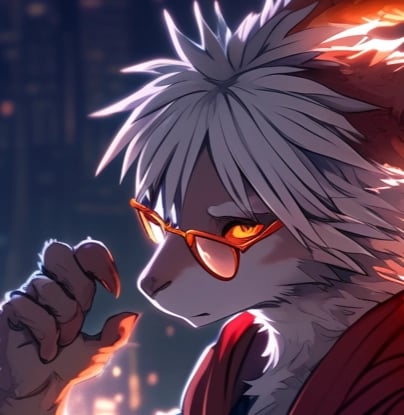 Tanuki, then chooses the name
 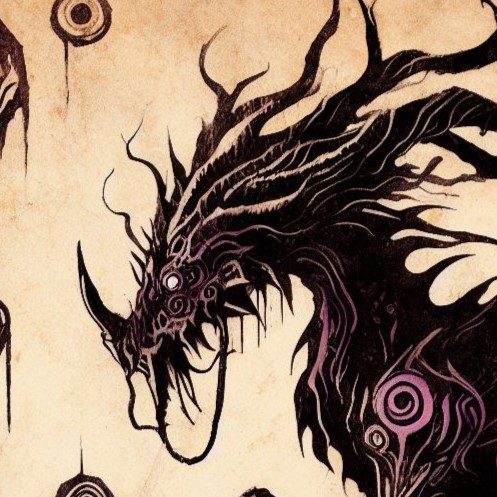 Jethro. The deeper origin of the Red and the spirit’s pre-Entaxis existence may remain open, but the naming event itself is no longer unrevealed.
Hosts and shards
True Hosts
In 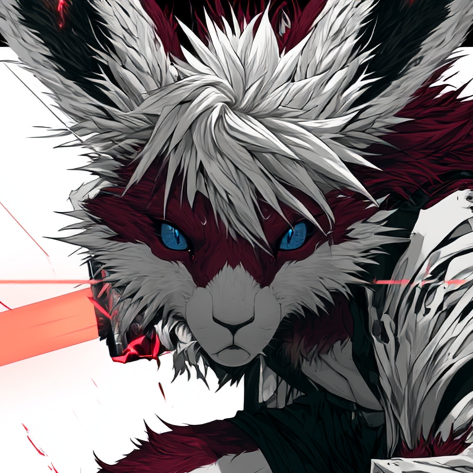 🟩 RSR - Bloodtiger,
 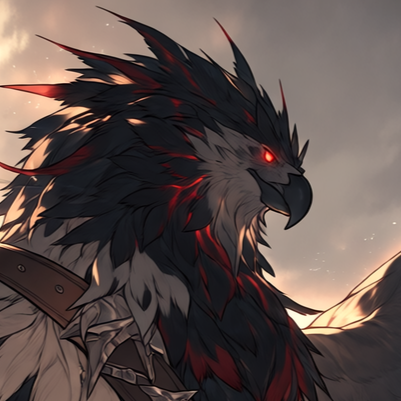 Flarion is the active vessel for Jethro. Before Jethro the only known host was Tanuki. The complete presence is described as a parasite “inside” Flarion, capable of shaping behavior, escalating impulses, and exerting pressure over long periods.
A true host is not merely influenced. The host contains Jethro’s central presence and serves as the source from which new shards may originate.
Known shard-bearers
- Kiara Quall
- Forza Ninetails
- Majora (older-timeline material)
What a Shard of Jethro is
A 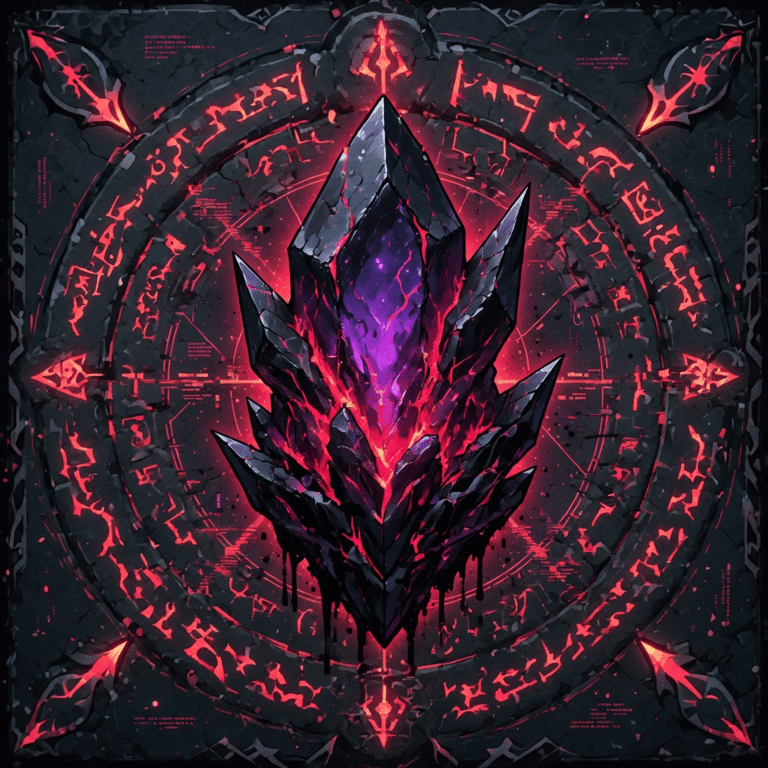 Shard of Jethro is not a physical object. It is a fragment of Jethro’s mind and will: a partial imprint small enough to embed within a person without requiring full possession, but powerful enough to operate as a distributed infection.
A shard can:
- Seed intrusive thoughts, compulsions, and nightmares
- Amplify fear, rage, grief, humiliation, or despair
- Destabilize identity and encourage a “shadow self” to emerge
- Create resonance with Jethro’s primary host or other shards
- Drive episodes in which the bearer’s ordinary restraint collapses
- Express outwardly through the identity-state known as Bloodtiger
Propagation rule
- New shards originate from the true host.
- Shard-bearers do not create shards in other people. (eg: Kiara and Forza are infected, but neither functions as a propagation source.)
Bloodtiger is an expression, not the shard itself.
“Bloodtiger” describes the observable identity-state or symptom cluster that surfaces when the shard’s pressure wins the moment. The infection can remain present even when the bearer appears entirely like themself.
How the influence works
Jethro’s corruption is not always immediate possession. It often behaves like a sustained campaign against the boundaries of the self.
1. Emotional amplification
Jethro feeds upon conditions that weaken resistance—especially isolation, fear, grief, shame, rage, and hopelessness. It magnifies those states until an extreme action begins to feel necessary, rational, or inevitable.
2. Perception distortion
Neutral events can be reinterpreted as evidence of danger. Warnings become threats. Preparation becomes conspiracy. Help becomes control. Once that interpretation hardens, the bearer may no longer be able to accept evidence that contradicts it.
3. Moral inversion
The influence frequently disguises escalation as virtue:
- Violence becomes protection.
- Revenge becomes purpose.
- Domination becomes strength.
- Isolation becomes safety.
- Surrender becomes relief.
4. Identity pressure
The shard can produce an internal “other”: a voice, reflection, dream figure, or alter-ego state that appears more decisive, capable, and unrestrained than the bearer’s ordinary self.
5. Resonance and convergence
Shard-bearers may feel drawn toward Jethro, the true host, or one another. This can manifest as fixation, recognition, dreams, or an urge to force distributed pieces back together.
The sleep motif
Sleep and waking language repeatedly marks Jethro-adjacent scenes.
- Forza — resistance-forward: nightmares and daydreams pressure him to “go back to sleep.”
- Kiara — surrender-forward: the language shifts toward “don’t wake up.”
The inversion reflects their different relationships with the shard. Forza is urged to surrender control; Kiara is encouraged to remain inside the surrender she has already begun to accept.
Resistance and stabilizers
Affection, responsibility, companionship, and emotional stability can suppress Jethro’s pressure. These forces do not cure the infection. They change the internal conditions from which it draws strength.
Effective stabilizers may provide:
- Grounding: a connection to the present and to an identity outside the shard
- Impulse damping: distance between an intrusive command and an action
- Protection from despair: fewer opportunities for isolation to become hopelessness
- Future orientation: responsibilities and relationships worth remaining awake for
Flarion and Majora
Older-timeline material suggests that 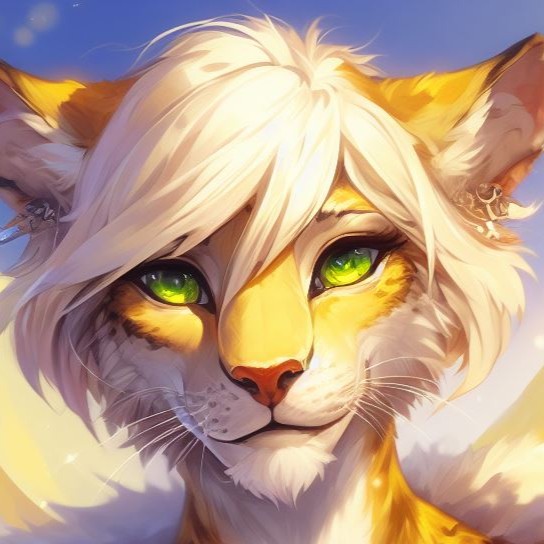 Majora’s affection and companionship helped Flarion remain functional for extremely long periods while carrying the primary presence of Jethro.
The bond did not remove Jethro. It helped keep Flarion from remaining in the prolonged despair upon which the parasite could most effectively act.
A stabilizer changes the conditions of the struggle; it does not remove the thing being resisted.
Carrier profiles
Flarion — the primary host
Expression: Jethro exists as the central parasitic presence within Flarion rather than as a limited shard.
Primary danger: gradual behavioral override and increasingly extreme decisions backed by Flarion’s already overwhelming capabilities.
Containment problem: extracting or suppressing Jethro is treated as extraordinarily difficult. Flarion’s scale of power makes any loss of control a cosmic threat rather than a private psychological crisis.
Known history: Jethro’s actions through Flarion include the events surrounding the 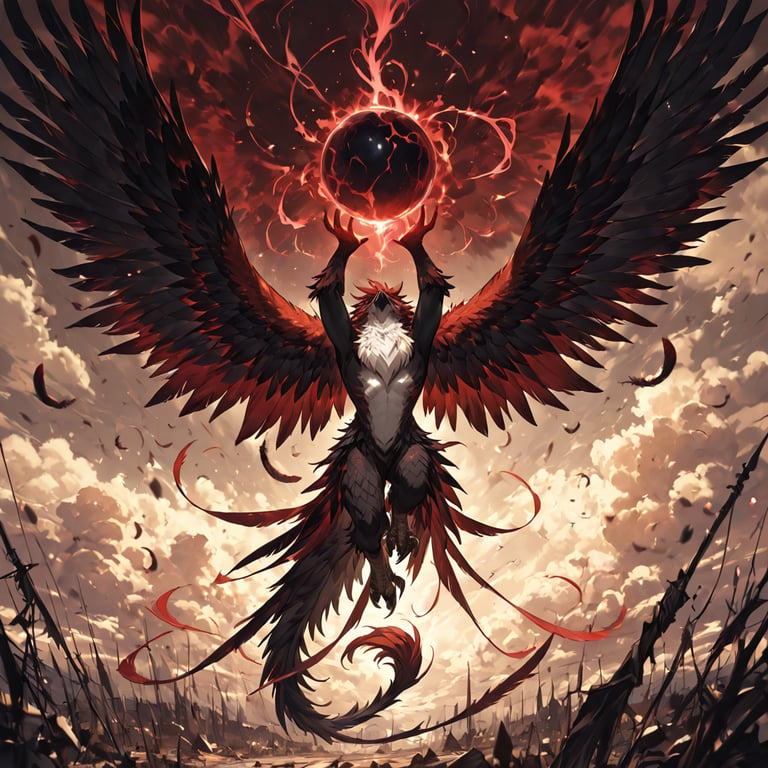 Second Battle of Eveny (Flarion).
Kiara Quall — surrender-forward
Expression: the shard negotiates with Kiara’s choices instead of merely haunting her. Its influence often sounds reasoned, confident, and purposeful.
Primary fuel: grief, humiliation, isolation, and rage.
Behavioral pattern: negative emotion is converted into momentum—especially revenge, lethal escalation, predatory confidence, and an urge to reunite with other shard-bearers.
Limitation: Kiara cannot create shards in others.
Forza Ninetails — resistance-forward
Expression: Forza experiences the shard as an occupying presence that must be watched, contained, and repeatedly refused.
Primary symptoms:
- Recurring nightmares and replay loops
- Intrusive commands and coercive internal narration
- A violent, competent shadow identity in dreams and daydreams
- Chronic anxiety, hypervigilance, and exhaustion from constant self-policing
- Increased pressure during moments of shame, fear, or helplessness
Protective anchors: personal bonds, responsibility, and the desire to protect others.
Limitation: Forza cannot create shards in others.
Open question: the reason Forza resists so effectively—and why his fur changes from yellow and white to red and white while shard-burdened—remains unrevealed.
Majora — slow conversion (older-timeline material)
Majora’s deterioration is presented as a gradual poisoning over thousands of years rather than an instantaneous break. Jethro weaponizes an existing love: her desire to protect her newborn daughter, 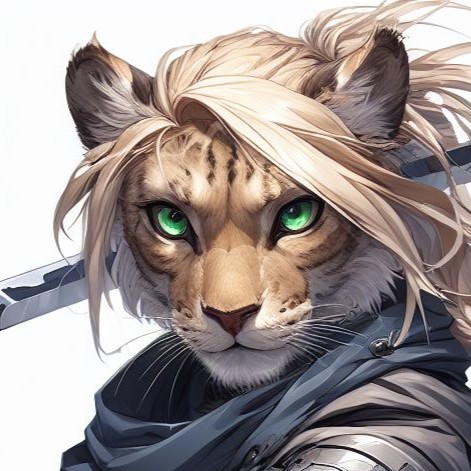 Kiara Quall.
The influence progresses through:
- Panic attacks without a matching external danger
- Growing paranoia concerning the Neverborn
- Fixed certainty that Kiara will be taken or killed
- Reinterpretation of neutral actions as proof
- Preemptive violence reframed as protection
The resulting attack on  Eveny becomes the
 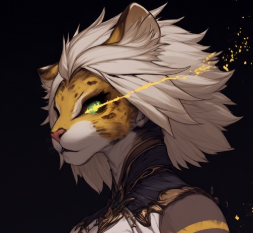 First Battle of Eveny (Majora).
Majora’s case demonstrates one of Jethro’s most dangerous methods: it does not invent a new desire—it converts love into a weapon and makes isolation feel necessary.
History
The Tanuki era (myth-scale / REV2.5-heavy)
Jethro first compromises Tanuki. After Tanuki was infected, the takeover took thousands of years, but once Jethro took control what followed were thousands of years of chaos and destruction at Tanuki’s hands. Eventually Jethro, through Tanuki, began exploiting the abilities of the master weaponsmith while pursuing the creation of artifact weapons capable of bending reality toward a permanent dream-state.
During that war, Jethro abandons Tanuki and transfers into Flarion, choosing the stronger vessel. Flarion becomes the long-term container for the primary presence of Jethro.
Older material describes a long aftermath in which Flarion under Jethro inflicts destruction across the cosmos while pursuing a perpetual dream or dark reality remade according to Jethro’s will.
Rainru
After being freed from Jethro’s control, Tanuki is described as carrying immense guilt. He creates Rainru as a secret failsafe intended to stop or limit Jethro’s spread during a galactic-scale emergency.
Rainru’s method of creation remains intentionally unknown. Its narrative role is primarily anti-corruption and containment rather than conventional warfare.
The First Battle of Eveny
In SAC Year 0017, Majora’s long deterioration culminates in an attack upon Eveny. The First Battle of Eveny (Majora) becomes a central example of how a shard-bearer may remain outwardly stable for an immense span of time and still suffer a catastrophic break.
Canon and revision guardrails
Current reader-facing rules
- Jethro is noncorporeal and requires hosts.
- Flarion carries the primary presence.
- In 🟩 RSR - Bloodtiger both Kiara and Forza carryShard of Jethro.
- A shard is a fragment of mind or will, not a physical object.
- Only the true host creates new shards.
- Shard-bearers are not transmitters.
- Emotional bonds may suppress influence but do not cure it.
- Jethro’s origin remains unrevealed.
Superseded REV2.5 transmission rule
Older material treated direct physical contact with an active carrier—particularly Flarion—as an automatic or unavoidable means of transmission. This is no longer canon in REV3.1. Contact should not be described as guaranteeing infection.
Open mysteries
- What is the deeper origin of the Red-born spirit before Entaxis, and what exactly did the Red shed?
- Why does becoming a true host reveal that origin?
- Does Jethro possess a true form, or is the antlered dragon purely legendary imagery?
- Why can Forza resist more effectively than other shard-bearers?
- Why does Forza’s coloration change while he carries the shard?
- What precisely allows attachment and emotional stability to suppress Jethro’s influence?
- How much awareness is shared between the primary host and distributed shards?
 Made with Bullet