A Shard of Jethro is the name characters use for a purely psychic infection - a fragment of 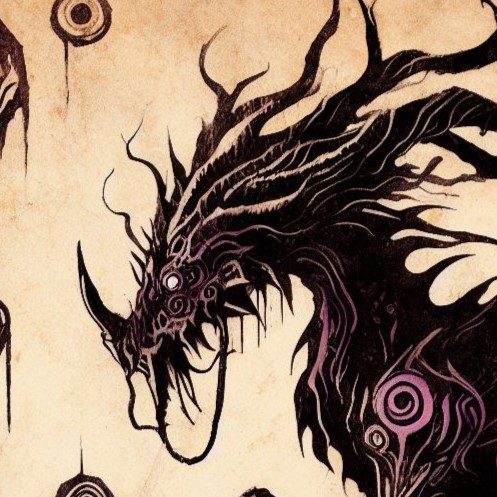 Jethro’s will living in someone’s mind. It has no physical “object” form. It behaves like a second occupant: pressuring thought, impulse, fear, and agency until the host’s behavior begins to warp.
Overview
A Shard of Jethro is best understood as a delivery vessel for Jethro’s influence:
- Vector (transmission): shard infection occurs through physical contact with the current primary host of “true” Jethro—in the main-era story, that host isFlarion. In most cases, contact reads as a fast onset: the shard enters and persists in the psyche, creating pressure, nightmares, and invasive intent.
- In at least two major cases, the contact occurs as an urgent rescue (Flarion saving a dying person), but the infection reads as Jethro taking the opportunity to spread rather than Flarion intending harm (e.g., Battle at Birch for Forza;Esther Assault on Quall for Kiara).
- Expression (symptom cluster): when that pressure breaks through in action, characters can name the outward state - often as Bloodtiger.
Working model (with room for revision): the story reads most cleanly if Jethro can choose to infect on contact—and sometimes elect not to.
- It explains why Flarion can make contact in rescue moments without “meaning to” infect, while Jethro still spreads when opportunity presents itself.
- It also preserves strategy: sometimes restraint is useful (avoid leaving a trail), while at other times rapid spread is useful (a “thin” distribution across many hosts).
This page describes how the shard presents, what it does to a host over time, and which characters have been shown (or implied) to carry one.
What the shard does (host-level beats)
1) Intrusion (the “second voice”)
The host begins experiencing:
- Nightmares / dream-bleed (dream logic leaking into waking life)
- Intrusive thoughts that don’t feel authored by the self
- A sense of being leaned on from the inside—as if attention is being steered toward dread, predation, or domination
2) Sensitization (fear becomes a lever)
The shard amplifies the host’s internal reactivity:
- Anxiety spikes at bad memories, shame, grief, or any destabilizing experience
- Emotional “edges” become handles - the shard finds the fault lines and pulls
- The host can become avoidant, volatile, or compulsively vigilant, not because they “want” to be, but because the shard is training the mind toward a narrower range of responses
3) Override (agency narrows)
Over time the shard competes with identity:
- Decisions degrade from “I decided” → “I was pushed” → “I watched it happen”
- Moral intent does not necessarily vanish, but it becomes harder to access under stress
- The host’s behavior starts to feel directed, even when they don’t understand the direction
4) Expression (the outward state)
When the shard wins a moment, the result becomes readable to others:
- Aggression, domination language, blood-saturated imagery
- A “wrongness” of motive: behavior that feels too hungry, too certain, too cruel
- In-world, this outwardly observable state is often labeled Bloodtiger (though the label is about what people can see, not what they can prove)
Relationship to Bloodtiger (cause → expression)
The shard is the fire in the engine; 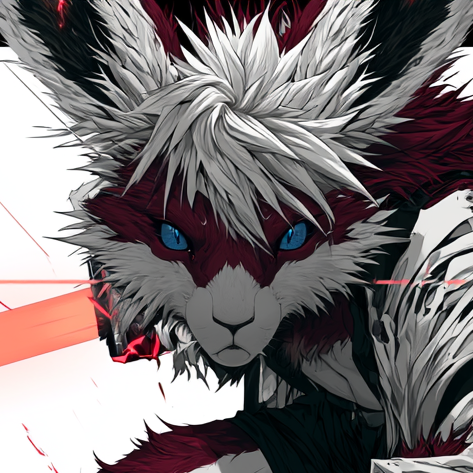 Bloodtiger is the crash you can see.
A cleaner framing:
- Shard of Jethro = the infection / influence inside the psyche (ongoing pressure)
- Bloodtiger = the host’s behavior when that influence is actively driving (episodes or sustained dominance)
In other words: the shard is the mechanism; Bloodtiger is the presentation.
The shard and Bloodtiger are tied together: the shard is the internal infection, and Bloodtiger is the outwardly visible state when that influence is driving. For a full reader-briefing on the Bloodtiger presentation, see: Bloodtiger.
Known and implied hosts (current scope)
Confirmed / sustained cases
- Forza Ninetails — a long-running, often-suppressed case; the shard presents as constant risk, with episodic breakthroughs. Forza is also the only observed shard host whose infection coincides with a lasting physical coloration change (yellow/white → red/white); the reason for this remains unknown even to the leadership circle of theNeverborn Templar onEveny.
- Kiara Quall — a dominance-forward case; the shard reads less like episodic flare-ups and more like occupation.
Long-duration proximity case (slow accumulation)
- Majora — implied infection via continuous millennia-scale exposure while functioning as containment aroundFlarion. The shard pressure “grows” over time until it catastrophically expresses.
Brief / momentary contact
- Akima Ciberling — momentary shard contact during the events ofSunset, lasting only minutes (or moments) but still long enough to leave an imprint: recognition, resonance, and a glimpse of what shard presence feels like from inside.
How the shard “reads” in the setting (signals, not proof)
Characters generally infer shard infection through patterns, not tests:
- Recurring nightmares with a consistent “voice” / intent
- Fear-resonance: the shard reacting to proximity of Jethro-adjacent phenomena
- A recognizable takeover pattern (the same brutal “shape” of behavior)
- Post-episode aftermath: shame, confusion, memory gaps, or the sense of having been piloted
Notes on dream-texts & fragmentary material
Some in-world texts and sequences read as if they are being “received” rather than authored in a normal way: rhythmic, symbol-forward, and emotionally precise while being context-light. This is consistent with how shard influence is experienced in dream states, without needing to claim a single provable narrator or perspective.
 Made with Bullet