Canon priority: rev3.1 primary; rev3.0 secondary; rev2.5 doesn’t matter because she didn’t fucking exist :D
Sun Jin Kaisara is the founder and supreme leader of the  Sun Jin Empire, and a high-level
  Nightfall Templar figure (a Redken) whose personal history, Templar ties, and covert tradecraft shaped a rebellion into an empire.
Overview
Kaisara’s influence operates on two layers at once: the public face of the empire’s war, and the private governance of the 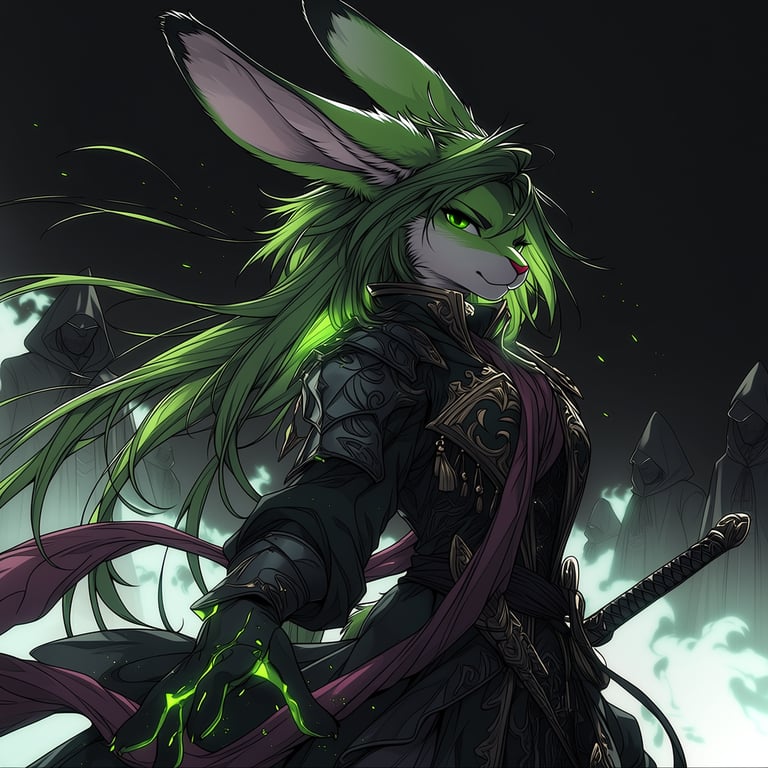 Via Nox Cabal, a hidden inner circle that coordinates Nightfall power, imperial logistics, and deep-cover intelligence .
Kaisara’s Nightfall legitimacy is rooted in  Magnum, where her history intersects the tribe’s defining figures:
 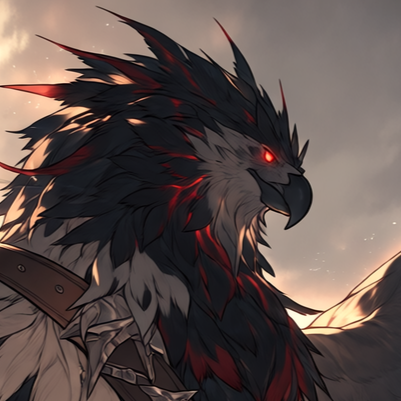 Flarion (the mythic predecessor), and the current Redken
 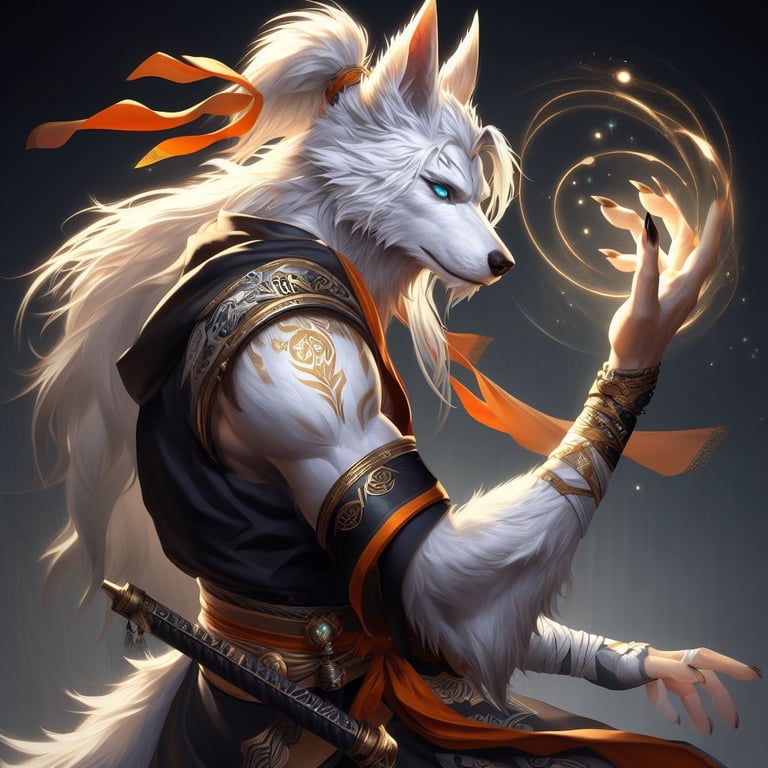 Atomis Silverwolf. In the modern era, that Nightfall link becomes an engine for “impossible victories” and a lever in the long war against the
  Systems Alliance .
Physical description
Kaisara is an Amber Krowen (lapine), typically presented as lean and athletic rather than bulky, built for speed, close-quarters violence, and the kind of endurance that reads as trained more than naturally gifted. Her expression tends toward controlled calm, with an alertness that makes even stillness feel like assessment. She is a renowned sword dancer, most often associated with a paired set of twin blades: one katana and one straight sword, the same blades that later become 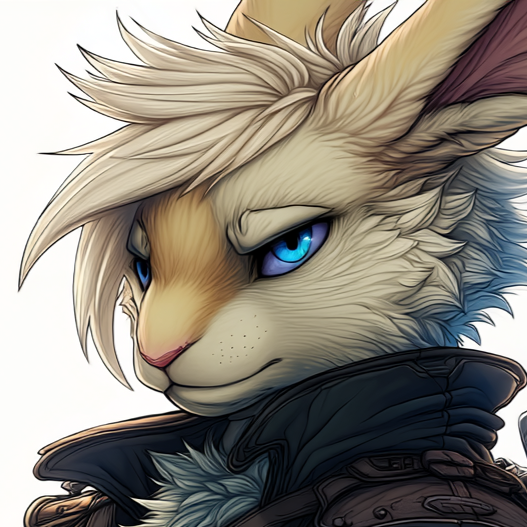 Forza Ninetails’s signature weapons.
Her most consistent visual marker is the purple scarf worn over tactical layers - less ornament than signature: a recognizable thread that follows her across eras and uniforms. In Nightfall contexts, she reads less like a conventional monarch and more like a field-operator who happens to be sovereign: armored fabrics, practical silhouettes, and a look that prioritizes mobility and authority over spectacle.
At a glance
- Roles: Empire founder; Nightfall Redken; Cabal co-lead
- Primary factions: Sun Jin Empire,Nightfall Templar,Via Nox Cabal
- Core anchors: Magnum (Nightfall),Amber Krowe (Encounter at Tisiphone Tower)
- Key relationships: Atomis Silverwolf (successor and mate),Ukatan (helped raise her),Flarion (adopted father),Tanuki (father)
- Forza axis: mentor → captor / weaponization legacy (Forza Ninetails)
Sun Jin Kaisara’s Name
For Kaisara, Sun Jin does not map cleanly onto ordinary naming convention. It is generally treated as an archaic name-layer: something older than casual address, surname, or throne-title, preserved through bloodline, myth, and translation. In modern records it behaves like a formal name component, but older traditions read it more like a sacral dynastic marker—a remnant of an older form flattened by bureaucratic and imperial usage.
- Atomis calls her Kaisara.
- Rio calls her Kaisara.
- Forza likely thinks of her as Kaisara, or “Kaisara” with emotional baggage.
- Alliance records say Sun Jin Kaisara because bureaucracy flattens sacred language into fields.
- Imperial doctrine says Sun Jin Kaisara because the name has become part of the legitimacy machine.
- Nightfall and older Templar records may preserve older forms— [REDACTED] Kaisara, Redken [REDACTED] Kaisara, or something close enough to survive translation.
Press “Full Name” for the full work in progress name convention.
Work in Progress
“Sun Jin” is short for Sunosia Jino
Why all this work around the details of a name? Because Kaisara is cool as fuck and Sunaria Jino (Gee-No) Kaisara slaps mad cheeks AND all along I never did have an explanation on wtf “Sun Jin” means. Is it a name? It’s not a title. It’s not what people call her. So I am fleshing that out. This is the shit I think about while stuck on the toilet.
Working Theory
Sun Jin is a sacred lineage marker
Sun Jin is a sacred lineage marker
In old Templar / Tanukian / Nightfall-adjacent convention, names have:
personal name + cosmic/bloodline marker + lived name
So Kaisara is her personal name, while Sun Jin marks her as belonging to Tanuki’s ancient line, or maybe “of the solar/buried-red inheritance.”
Like:
Sun Jin = “of the old sun-line” / “of the hidden radiance” / “child of the preserved light”
Modern people mistake it for a first name/surname. It is neither.
So yeah: big shrug. Some names are older than paperwork.
So yeah: big shrug. Some names are older than paperwork.
Personality & presence
Redken Era
During Kaisara’s roughly two centuries as Redken of the Nightfall Templar, her presence did not soften Magnum so much as refine it. She helped turn the tribe’s raw, animal fury into something sharper: a culture that learned to harness 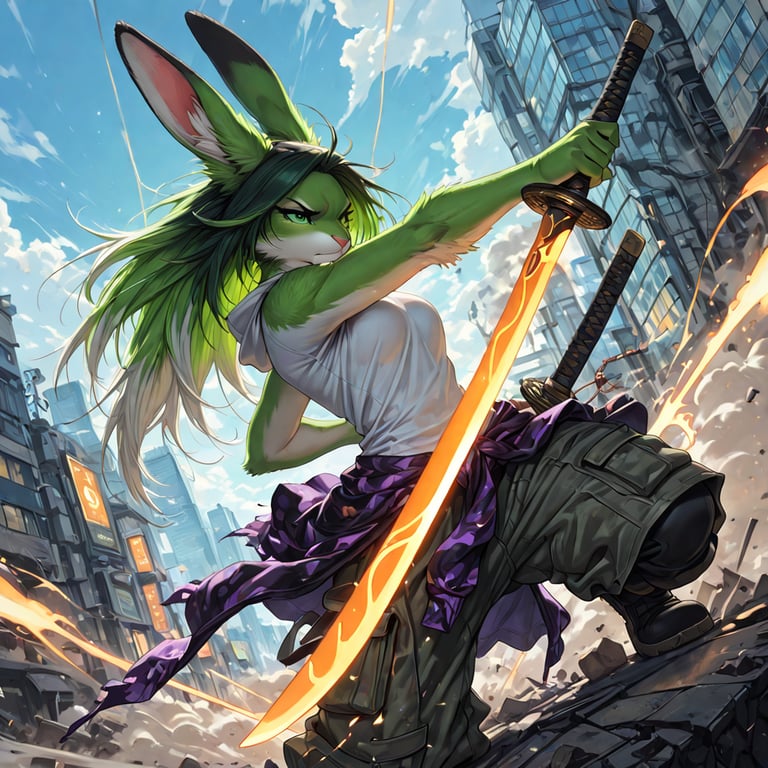 Varunium Steel for uses other than weapons, read the planet’s energies with greater discipline, and convert Magnum’s hostile environment into a technological and martial advantage. Under her, Nightfall saw a massive shift in capability—not because she made them less dangerous, but because she taught them to aim that danger.
Her rule was gentle by Nightfall standards: patient, deliberate, and less hungry for waste than the older conquest-driven posture. But “gentle” never meant civilized in an off-world sense. Kaisara still ruled within a warrior cult of Varuna, one whose tribal roots remained savage, territorial, and intensely animalistic. Intruders from other planets could still be slaughtered outright, their deaths made into displays of doctrine and dominance; the eating of flesh or organs remained part of the tribe’s brutal symbolic language, proof that Nightfall violence was not merely tactical but ritual.
Kaisara could not change the nature of the beast. What she could do was train it. Her Redken era is best understood as the transformation of Nightfall from a raw storm of claws and fang into a sharp arrow: still animal, still sacred, still terrifying, but guided by discipline, technology, and strategic purpose.
Imperial Era
Kaisara’s defining trait is a kind of practiced inevitability: the sense that she is always already planning several moves ahead, and that even warmth is something she can deploy deliberately. During the 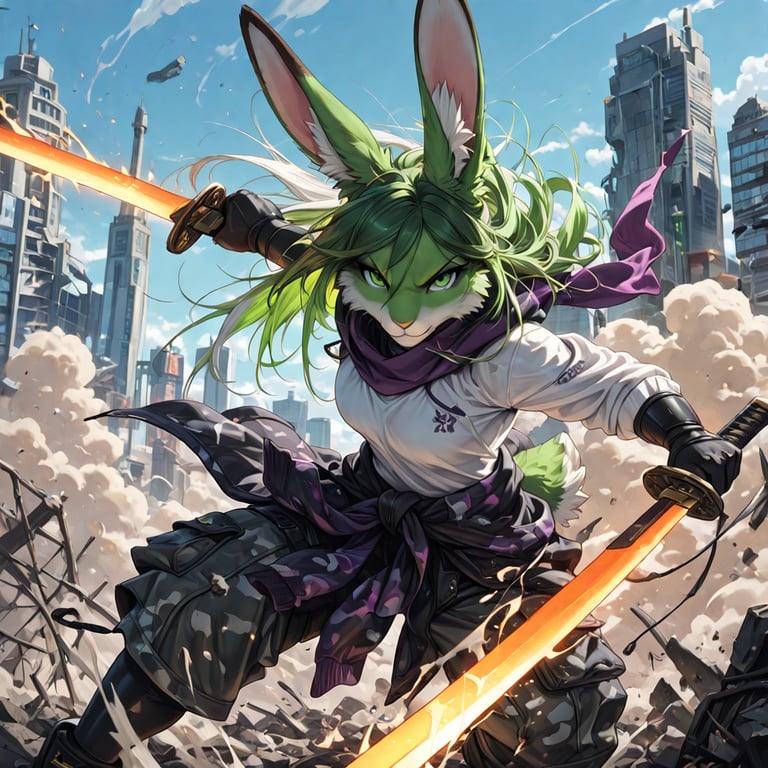 Liberation of Bethany, that warmth was genuine enough to read as cordiality: when she first met
  Rio Narro, Kaisara presented herself as controlled, approachable, and politically lucid rather than volatile.
That composure later developed fractures. Around SAC 0038, Kaisara passed through a period of serious emotional swings—rage, anger, and grief-pressure sharp enough to threaten the image of inevitability she had built around herself. She tried to keep those swings hidden from the people beneath her, preserving the visible architecture of command even when her private state was far less stable.
What kept the Sun Jin Alliance leadership from losing its course during that period was Atomis Silverwolf. Atomis functioned as Kaisara’s counterpart and stabilizing doctrinal anchor: not replacing her authority, but keeping her aligned with the long strategic arc when emotion threatened to bend that authority into something more reactive.
By the time of  🟩 RSR - Bloodtiger when visited by Rio Narro and
  Akima Ciberling, Kaisara’s attitude has leveled back to a calm demeanor, at least publicly.
Press “Hidden cause” for the underlying reason behind Kaisara’s SAC 0038 instability.
Kaisara’s emotional volatility around SAC 0038 was rooted in what she believed had happened to Forza Ninetails. She had attempted to have Forza brought before her for his protection, but was led to believe he had been killed in the process. She did not know Forza was still alive, or that the truth of his survival had been hidden from her.
Command & Tradecraft
Kaisara’s leadership reads less like throne-room rule and more like field-built governance: decentralized coalition control, strict information management, and a preference for trusted intermediaries. The Sun Jin Empire’s public victories establish legitimacy, but its private successes often rely on assets whose names cannot be spoken safely, Nightfall operatives, Cabal logistics, and intelligence distortions that keep the Systems Alliance reacting late.
Nightfall context (Magnum → Redken)
Kaisara’s credibility inside Nightfall comes from lived proximity to its doctrine and its engine-world, Magnum. Her history is entangled with Nightfall’s most defining living figures: Flarion, and Atomis Silverwolf. That entanglement is what allows Kaisara to use Nightfall as more than an alliance, it becomes leverage, myth, and enforcement rolled into one.
Early Amber Krowe period (security apparatus → Shrike)
Long before the Cabal or the Sun Jin Empire, Kaisara’s presence on  Amber Krowe was driven by a single motive: using the Systems Alliance’s own security infrastructure to locate her father,
  Tanuki. That search forced Kaisara into the machinery of state where access, credentials, and deniable violence were the only currencies that reliably purchased information.
In that era, Kaisara becomes an assassin within the 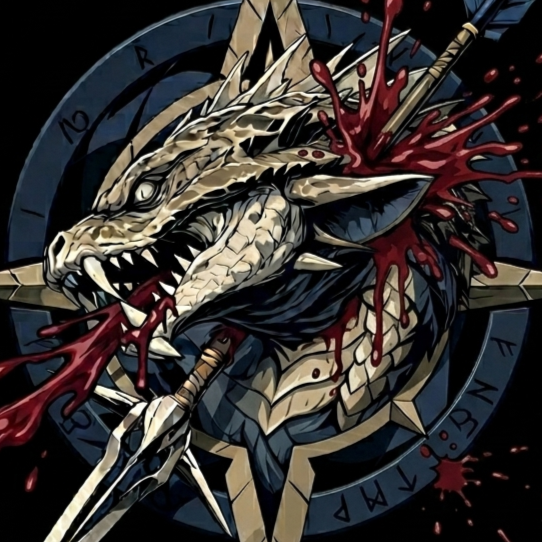 Shrike program and begins running deep-cover missions not for ideology, but for leverage: each operation a trade for another fragment of intel. It is also during this Shrike period that Kaisara meets Forza Ninetails and starts training him as a partner.
Those missions ultimately culminate in the  Encounter at Tisiphone Tower, where Tanuki is killed. Kaisara’s grief and anger harden into purpose, becoming the ignition point that later triggers her rebellion and the rise of the Sun Jin Empire.
Via Nox Cabal
The Via Nox Cabal is the mechanism that makes the Sun Jin Empire’s “impossible victories” coherent. Kaisara is the visible architect, but the Cabal is the buried control layer: a shared, compartmentalized structure where Nightfall doctrine, imperial logistics, and deep-cover intelligence intersect. It is also the reason Kaisara’s war is never only against the Systems Alliance; it is part of a longer arc that bends toward the Nightfall–Neverborn endgame.
Forza Ninetails
Press “Part-1 Bloodtiger” tab for events that occur during during the course of the BT story.
Kaisara is central to the origin story and trauma arc of Forza Ninetails, first as mentor, later as a name associated with the regime that turned him into a weapon.
However, the actual chain of custody that places Forza into captivity is indirect and layered. When Kaisara asked 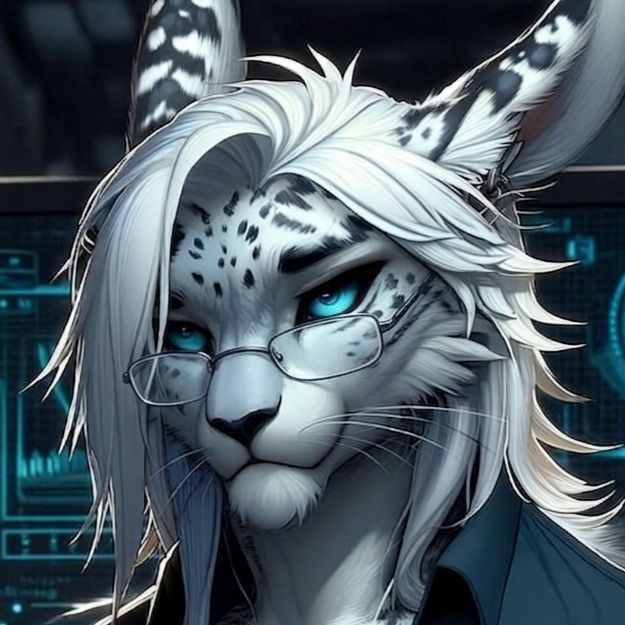 Ukatan to have Forza brought safely to Bethany, she believed the request would be honored. Ukatan instead lies, reporting that Forza died, and hands Forza over to
 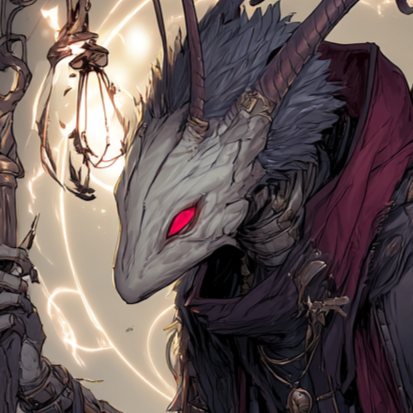 Skithix, who is the one to deliver him to
 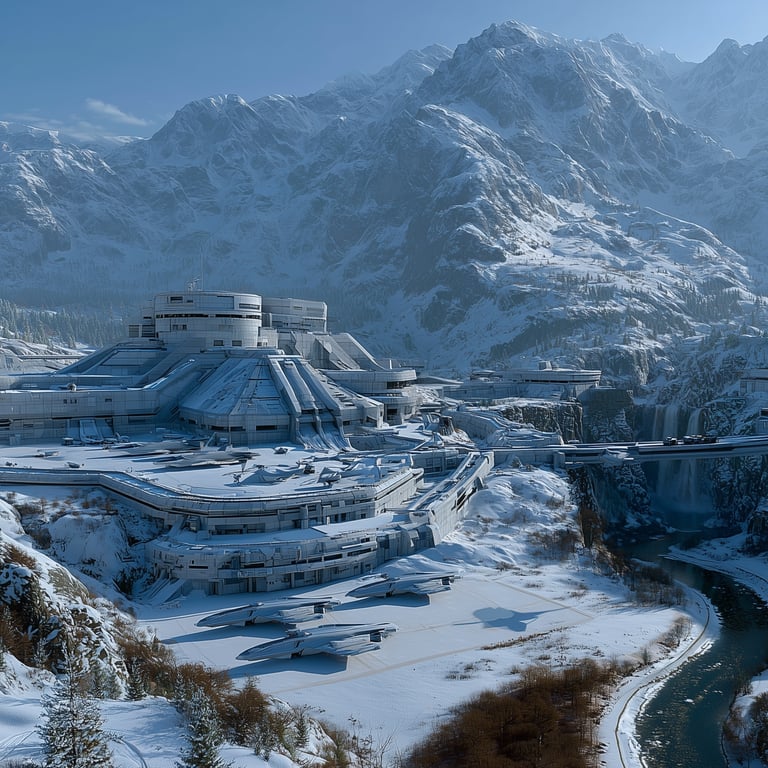 RD10-003 for containment and experimentation.
Kaisara remained far removed from the operational reality of who was being tested at the facility. When Kaisara eventually learns the truth, she acts in secret: sending an encoded message that dispatches Rio Narro to free Forza (see 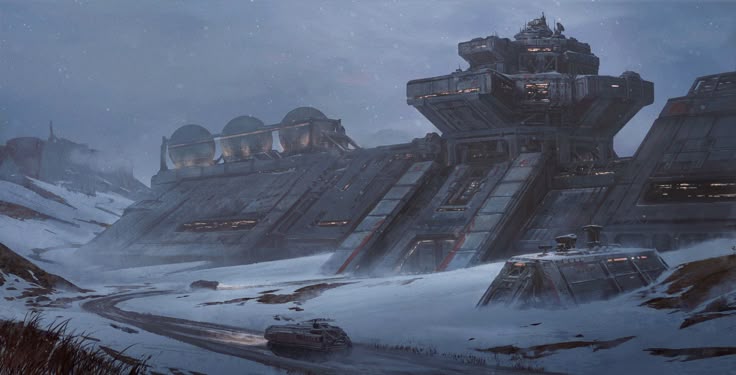 RD10-003 Incident), but Forza spends many many years wrongly blaming Kaisara for the trauma he endured.
 Made with Bullet